
Check back regularly for updates from Stacy Laravie (Ponca), NATHPO Indigenization Director
As part of her work, NATHPO Indigenization Advisor Stacy Laravie (Ponca) has been and will continue to travel the country meeting with Tribal Historic Preservation Officers, seeing their work, hearing their concerns, and bearing witness to the ways THPOs and Tribal communities are doing the work of historic preservation day in and day out.
More Than the Guidelines: An Introduction
Thatia’ A’thayon WoNgithe, hello all my relatives.
This page More Than the Guidelines focuses on the connection between THPO work and duties with the ancestors, people, descendants, land, and water. Tribal Historic Preservation Officers are so much more than the framework and federal guidelines. When you visit a Tribal Nation and go out on the land with THPOs, and learn more about their people and ancestors, you can see why THPOs do what they do.
THPOs do not get to clock out because it is a lived role, not just a job. Most are culture bearers and knowledge keepers on a personal level and carry much knowledge on different events through life and ceremony. They are warriors and protectors.
I hope this page will show you the connection and beauty of all the kinships and THPO work.
Nadaha (live on well!)
Stacy Laravie
The Ponca Lodge Fire
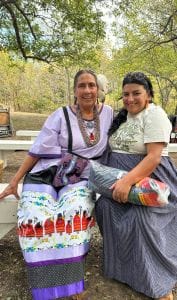
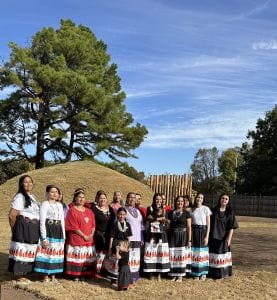
It was a beautiful sunny fall day in Oklahoma at the home of Casey Camp-Horinek, grandmother I call her. Casey is a Human Rights and Environmental Justice Warrior, water protector, pipeline fighter, traditional knowledge keeper, matriarch, and so much more. At her home children were playing, soup was cooking, and the smell of the cooking fire and bison soup filled the air. You could hear the people sharing stories of long ago and recent, including Pawnee, Otoe, Quapaw, Osage, Tonkawa, Choctaw, and Kaw. All the beautiful Ponca women, aunties, sisters, and grandma's laughter seemed to make the place feel even more like home. On my way to Grandmother Casey's home, a sense of sadness crept in as I gazed at the oil refineries and wells. But then a shift as I pulled into the driveway. In the middle of the oil chaos a haven of healing and hope. I could breathe. This made so much sense as we were surrounded by warriors who fought DAPL and other pipelines.
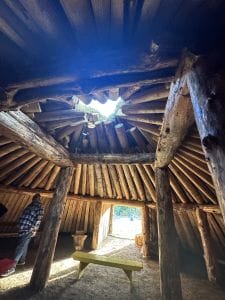
Casey and her son Mekasi had a vision to unite the Ponca people and make a gathering place for all. From this vision came a Ponca earth lodge. This earth lodge is also a place to come to for healing. The Pa'tha'ta Ponca scalp dancers will steward and be caretakers of the lodge. The first Ponca earth lodge in Northern Oklahoma by Ponca City. The day started off with visiting and refreshments, then everyone was called over to the lodge. Casey's son Mekasi led the men in prayer and started the ceremony. Men held the fire and women carried the water like it was done so long ago.
First, the firekeepers and men went into the lodge. They sat around the fire to keep it and prepare it for prayer and ceremony. The women of all ages followed with the water. The women surrounded the men, and a Ponca song was sung by all, led by the Ponca drum. Ponca men and women in the lodge raised voices in song, prayer, gratitude, and fellowship to Wakanda, the creator. As I stood there listening to the songs, I couldn't help but think we were surrounded by our ancestors. For the first time, in a long time, the two Ponca nations were together in a lodge ceremony.
In 1877 the Ponca were forced from Northeast Nebraska to "Indian Territory" on the Ponca trail of tears. A small band of Ponca followed Chief Standing Bear as he walked back to Nebraska. He promised his dying son Bearshield that he would bury him in the homelands of Nebraska. Those Ponca who walked back were arrested and a trial was set. After the trial that was in favor of the Ponca, those Ponca got to stay in Nebraska. Not all was to be celebrated as the Ponca relatives, who were in Oklahoma, had to stay in Oklahoma. This caused a governmental divide. Ponca Tribe of Nebraska and Ponca Nation of Oklahoma. When I am asked what I am I say, "I am Ponca". I do not recognize the forced division.
On this day in the lodge, as the smoke lifted our prayers and hopes, we were only known as Ponca. One people. I knew the ancestors were there with us because we were doing something that hadn't been done in a very long time. Ponca in ceremony, gathered around the lodge fire. The ancestors heard us, we are resilient, we are here. I can't help but wonder, were the ancestors songs about us? I believe we are the answers to their prayers.
The men left the lodge and the women continued. The stories and strength of all the women brought a sisterhood and unity as we all had similarities and had the same mission and visions as warriors for the people. Land and water protectors, seed keepers, knowledge keepers, water carriers, and traditional knowledge bearers. Each one with a name that was carried down from our ancestors. Our names spoken in our languages and spoken into the smoke that cured the wood in the lodge. As if to say we are all here, the names of those ancestors that were surrounding us is now engrained into the raw wood.
After, we feasted, and gifts were given away from Grandmother Casey. This matriarch who brought us to gather and had a vision and whose children had a dream! Our spirits needed this and it was Uda' Mak'a (good medicine).
All photos courtesy of Stacy Laravie (Ponca)